
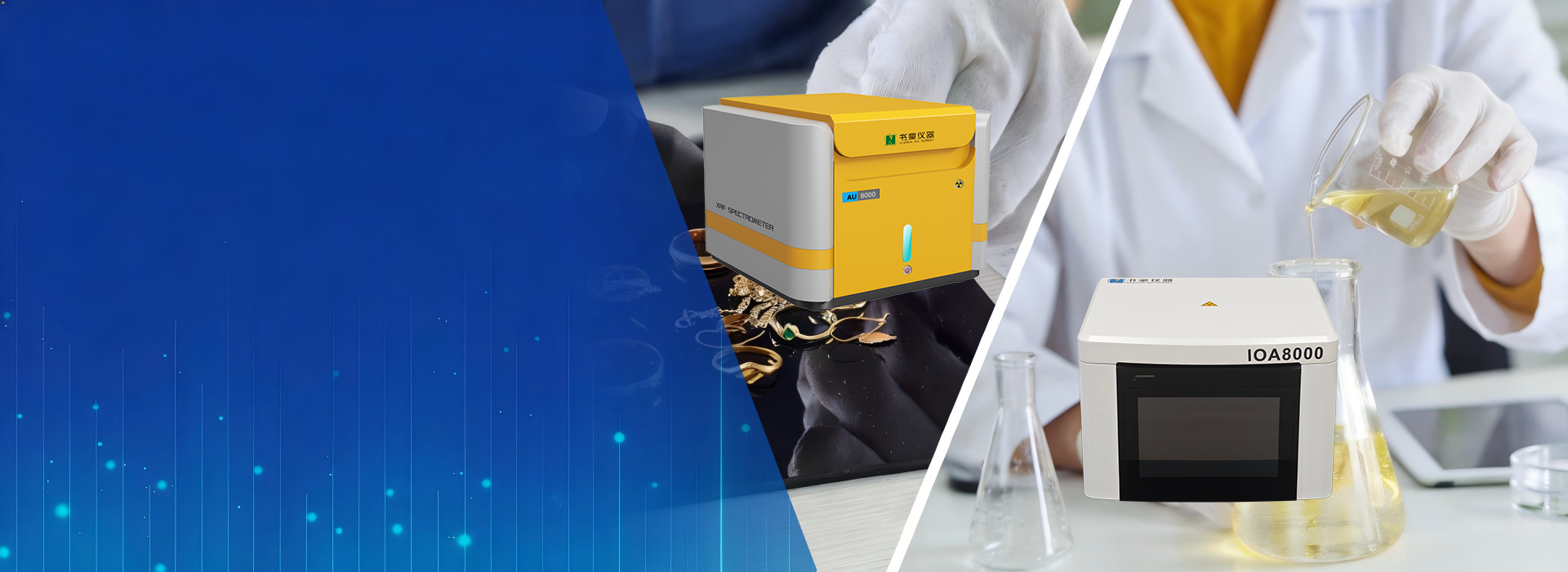
Your Leading XRF Spectrometer Manufacturer in China
Energy-dispersive X-ray fluorescence spectrometers (EDXRF) use solid-state detectors (such as Si-Pin or SDD) to directly measure the characteristic X-ray fluorescence produced by the sample. They do not require a complex spectroscopic crystal system, have a compact structure, can perform simultaneous multi-element analysis, and are easy to maintain.
Soohow Instruments is one of the few domestic manufacturers that has mastered the core technology of EDXRF. If you are looking for a portable device that can quickly, non-destructively, and accurately perform precious metal identification, environmental compliance screening, or alloy grade analysis, the Soohow XRF spectrometer is worth trying. Contact us now to schedule a free demo or get a customized application solution.

Offer a Variety of XRF Spectrometers for You
The detector of an XRF spectrometer simultaneously receives fluorescence signals across the entire spectrum. A multichannel analyzer maps energy to elements, enabling simultaneous analysis of a wide range of elements from magnesium to uranium. This process does not consume the sample or change its shape, and the detection can be completed in seconds to minutes.
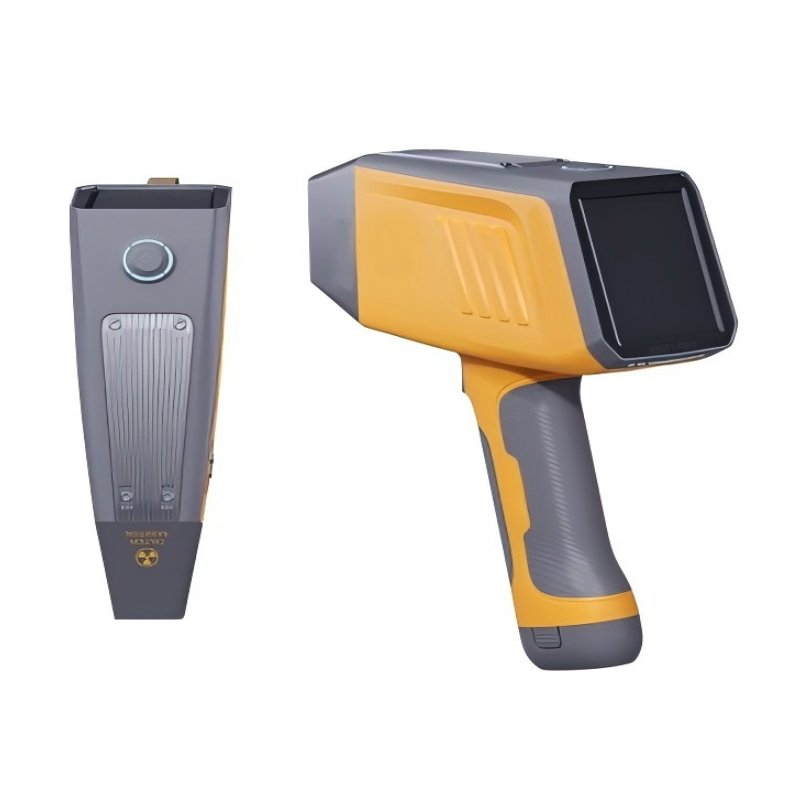 X-MAX II Handheld XRF Spectrometer
Featuring a handheld design, the unit weighs less than 1.5 kg and incorporates built-in databases for various alloys, as well as analysis curves for precious metals.
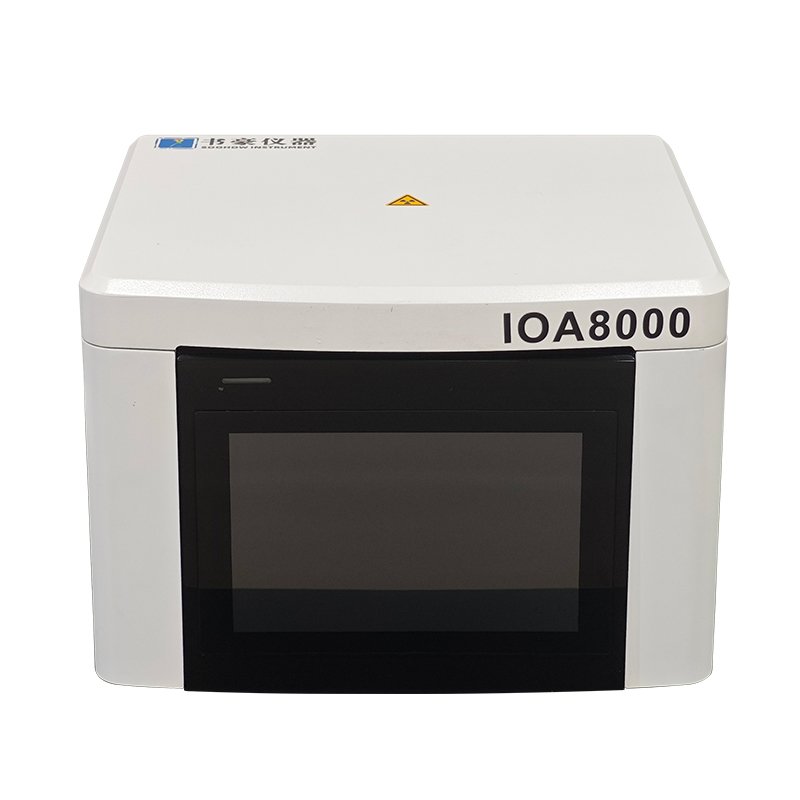 IOA8000 XRF Analyzer
A smart fuel analyzer designed specifically for the rapid and precise detection of sulfur in fuel.
Soohow's XRF Spectrometers Safeguard Your Assets and Quality
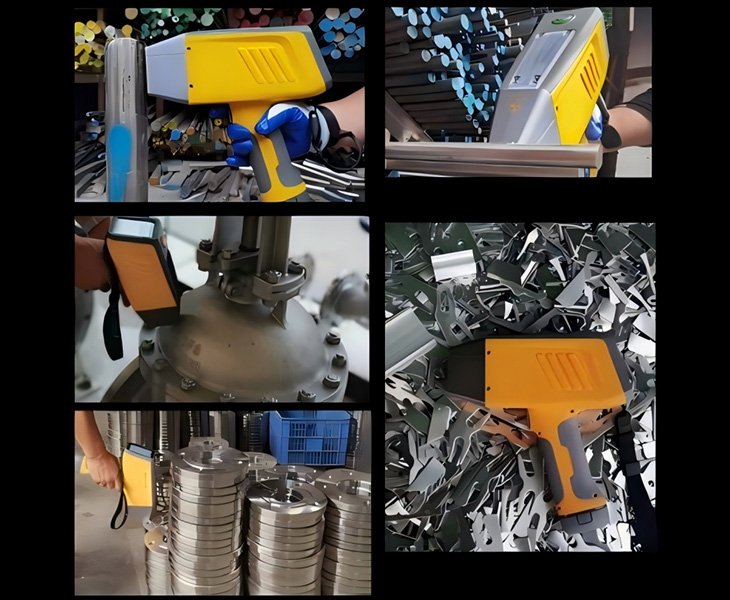
XRF spectrometers enable non-destructive and rapid detection of elemental composition in samples, safeguarding your assets and quality at multiple critical stages: in gold trading, accurate purity determination avoids value disputes; in metal recycling, rapid identification of alloy grades improves sorting efficiency; in product quality control, screening for hazardous substances ensures compliance; and in marine fuel monitoring, rapid detection of sulfur content ensures environmental compliance. The content of each element corresponds to different business values: gold content determines the transaction price, lead content determines environmental compliance, chromium and nickel content determines the grade of stainless steel, and sulfur content determines whether fuel can be used in compliance with regulations. This system helps users confirm value before transactions, screen for risks before compliance, and identify materials before sorting, avoiding economic losses and legal risks caused by misjudgment of composition.
Timely access to information on the elemental composition of samples means that their value can be accurately determined, decisions can be made quickly, and risks can be effectively mitigated, thereby enabling precise control in all aspects of trading, production, recycling, and testing.
In theory and in practice, the two go well together. XRF spectrometers use X-ray excitation, which means they don’t need to prepare the sample, and they do non-destructive testing. They can be used with solids, powders, and liquids, and they work with all elements from Na to U. They are less sensitive to light elements and can be used for quick on-site screening, identifying alloy grades, testing precious metals, and checking for RoHS compliance. OES uses spark/arc excitation, needs samples to be prepared (the surfaces of metals need to be polished), is a micro-destructive testing method, works well with solid metals and oils, is very sensitive to light elements like C, S, and P, and is good for controlling the composition of metal smelting and keeping an eye on oil wear. Recommendations for selection: XRF is best for non-destructive testing, quick on-site screening, and analysis of different shapes; OES is best for accurately measuring light elements in metals and checking the quality of production.
Yes, it can. Handheld XRF spectrometers come with built-in analysis curves that are made just for gold, karat gold, platinum, silver, and other precious metals. This lets you accurately figure out the elemental content of gold, silver, platinum, palladium, copper, zinc, nickel, and other metals. Before testing, you need to make sure that the sample surface is clean and free of any plating. The testing process usually takes 10 to 30 seconds. The device can measure both the primary gold content and any impurities in karat gold at the same time. It then uses normalization calculations to find the final purity. The test results meet the GB/T 18043 standard, which means that these tools can be used in a lot of different places, like jewelry appraisal, pawnshops, and gold recycling operations. For samples with gold plating or gold-filled surfaces, the XRF spectrometer can only look at the composition of the outermost layer. It can’t tell you how pure the material is underneath the surface. In these cases, density-based methods or destructive testing are needed to confirm the results.
The X-ray tube and the detector are the main parts of an XRF spectrometer. Both are solid-state devices with no moving parts, and they can last for 5 to 10 years in theory, depending on how often they are used. As the X-ray tube works, its emission intensity will slowly drop. However, performance can be restored by replacing the X-ray tube or using software compensation. The main things that need to be replaced often are test window films (which protect the detector), sample cups (for powder and liquid samples), and reference standards (for calibration). The IOA8000 model’s main consumables are standard oil samples and sample cups. The window film on handheld XRF devices is a part that wears out over time. It is best to check and replace it every three to six months.
The most important parts of an XRF spectrometer are the X-ray tube and the solid-state detector, which can be a Si-PIN or SDD. Both of these parts are solid-state devices that should last for five to ten years. Over time, the X-ray tube’s emission intensity gets weaker. It needs to be replaced when it drops below a certain level. Most of the time, you don’t need to replace detectors, but after a long time of use, they might not work as well because they get dirty. You can usually fix this by cleaning or resetting them.
People who use Soohow Instrument’s XRF spectrometers can get free help with remote calibration from our technical team at any time. Users only need to have standard samples ready, like alloy reference standards or gold standard blocks. Our engineers will then guide them through the calibration process over a video call, which includes placing the standard samples and confirming the results. It usually takes 1 to 2 minutes to calibrate an XRF spectrometer. If users don’t have standard samples, Soohow Instrument can send them in the mail. After the calibration is done, our engineers will check it from a distance to make sure that the XRF spectrometer gives accurate and trustworthy analytical results.