
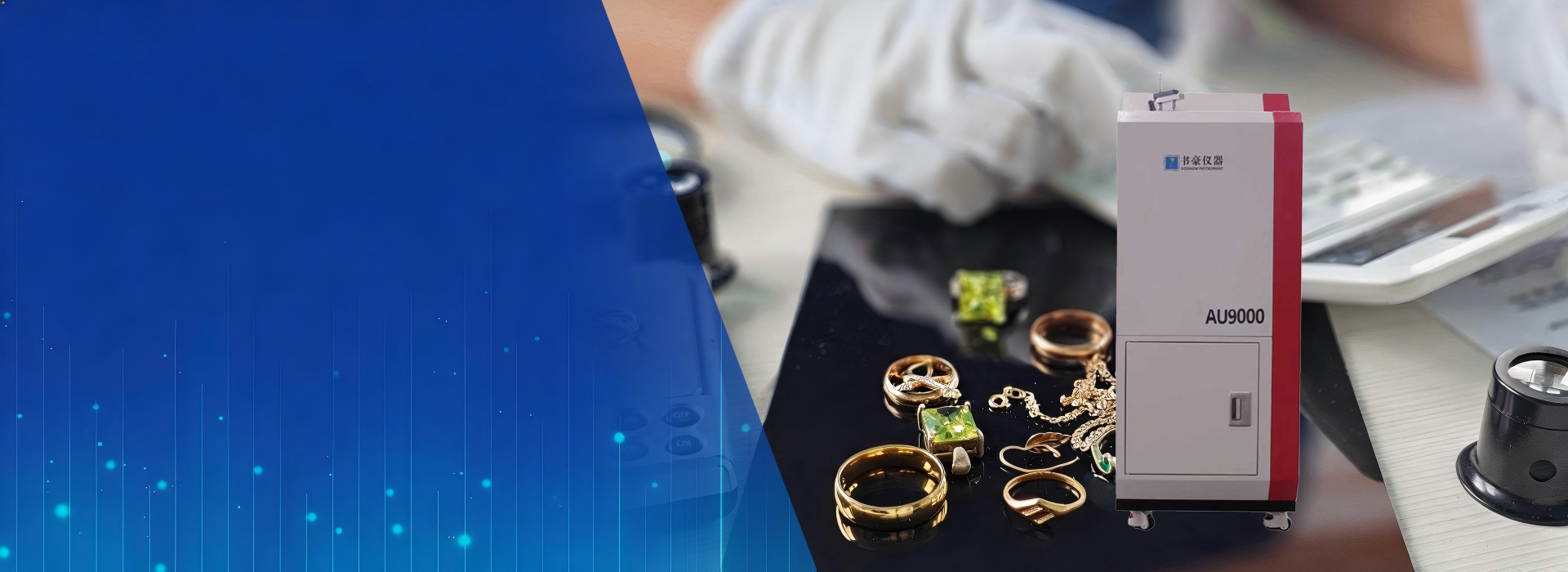
Your Leading Gold Analyzer Manufacturer in China
Soohow Instrument is one of the few Chinese companies that can do both Optical Emission Spectrometry (OES) and X-ray Fluorescence (XRF) for gold analysis at the same time. We have a wide range of gold analyzers, from high-precision lab models to benchtop non-destructive testing units and specialized spectroscopic analysis systems. These analyzers meet the needs of many different industries, including jewelry manufacturing, quality inspection agencies, pawnshops, and precious metal recycling businesses.
If you want expert advice on which gold analyzer is best for your business needs, or if you want to set up a product demonstration, please get in touch with Soohow Instrument. We can help you test the purity of your gold more accurately and reliably.

A Variety of Gold Analyzers for You
Analyzing gold purity requires selecting an appropriate technical approach based on the specific form of the sample and its intended application. The Soohow gold analyzers incorporate two distinct technical approaches, enabling comprehensive testing ranging from raw material acceptance to the final release of finished products.
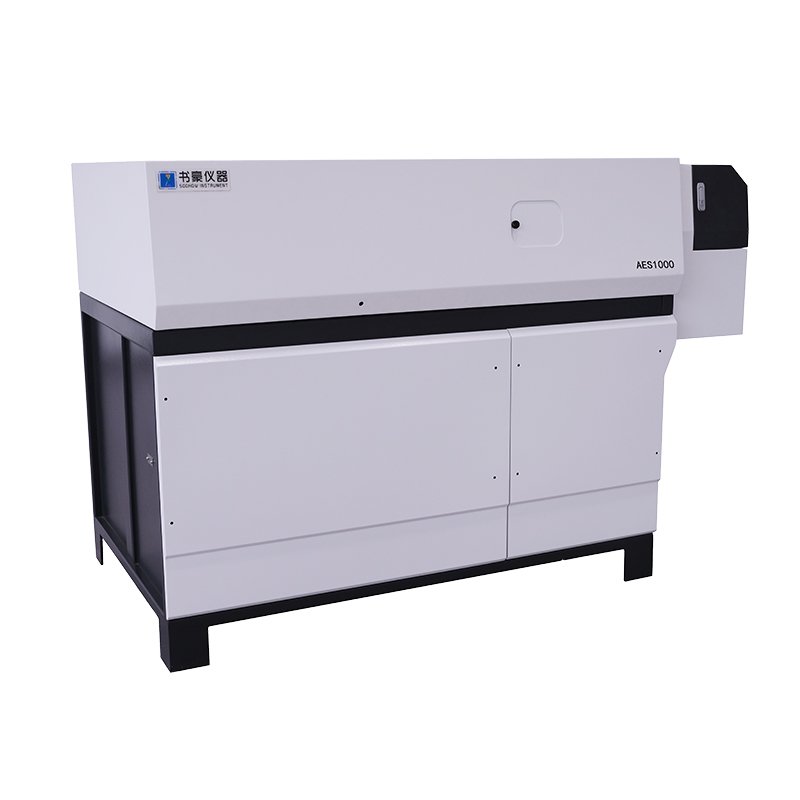 AES1000 PMT-Based Spark OES
It is set up with calibration curves that are made just for gold analysis and is built on the AES998 high-precision PMT spectrometer.
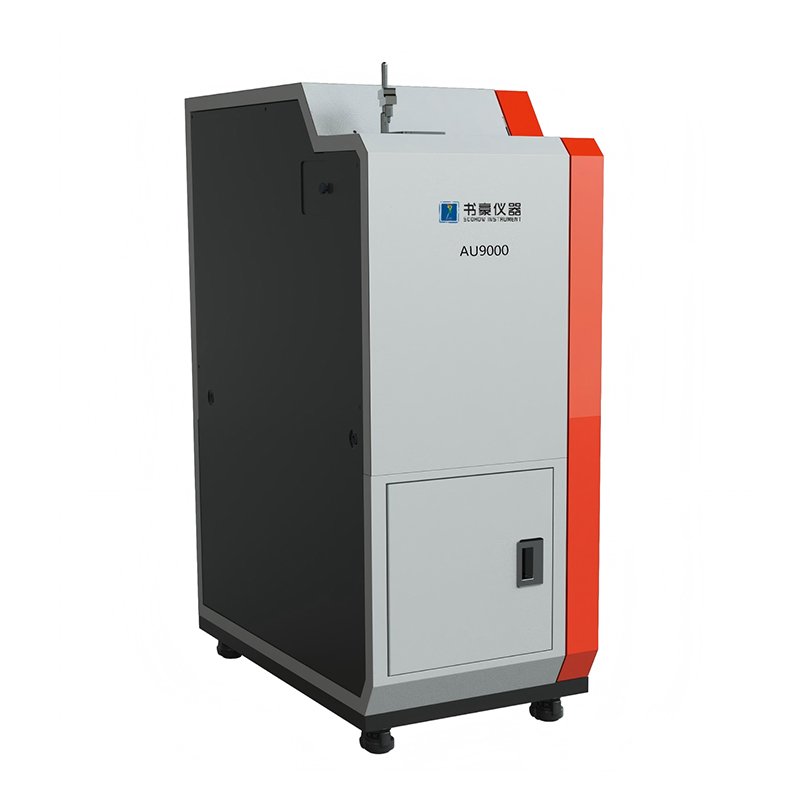 AU9000 CCD-Based Spark OES
Using the FS800 vertical CCD spectrometer as a base, with calibration curves made just for gold analysis.
Installation & Training for Your Gold Analyzer
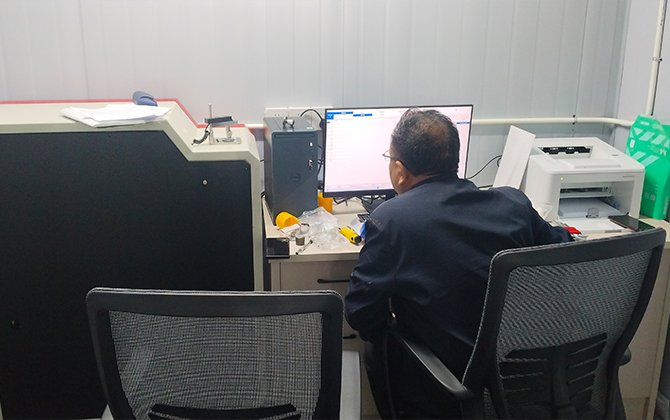
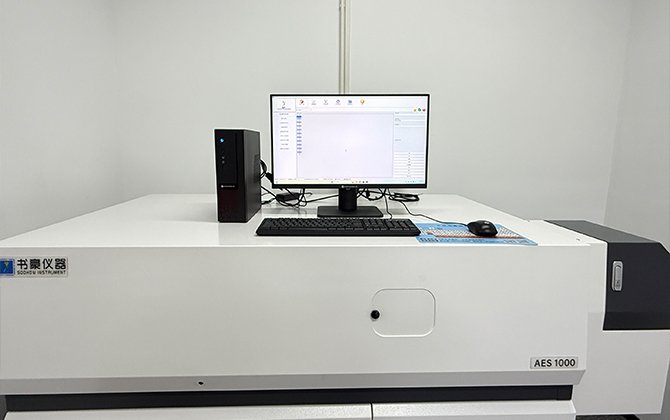
Our engineers make sure that your gold analyzer is fully functional and ready to use as soon as it arrives, either by giving you remote help or coming to your site. Our engineers make model-specific calibrations and adjustments during the installation process:
Spark Direct-Reading Gold Analyzers (AES1000, AU9000): Finishing the calibration of the optical path, the optimization of the excitation parameters, and the commissioning of the argon gas system.
XRF Gold Analyzers (AU8000): Checking the detector’s response, making sure the sample chamber is lined up correctly, and testing the safety interlock.
After the installation and commissioning are done, our engineers give full operational training on the gold analyzer. This training covers how to prepare gold samples, set up detection parameters, calculate purity, and do important daily maintenance tasks. The training includes working with real samples and goes on until your operators can do gold analyses on their own and understand the reports that come from them.
Yes, it can. All three gold analyzer models feature built-in analysis curves specifically designed for karat gold. The AES1000 and AU9000 determine purity (K-value) by measuring the content of elements such as gold, silver, copper, zinc, and nickel, and then normalizing the results. The AU8000 directly outputs both the gold content and the K-value. For common karat gold alloys (24K, 22K, 18K, 14K, 10K), the deviation between the test results and the nominal values typically falls within ±0.3%.
The AES1000 gold analyzer is capable of making this distinction. Its detection limits for trace impurities—such as silver, copper, and iron—within the gold reach the parts-per-million (ppm) level; thus, if the total impurity content is less than 0.01%, the sample can be classified as 99.99% pure. The AU8000 and AU9000 models offer sufficient accuracy for routine purity testing (ranging from 95% to 99.9%), but they possess limited capability to distinguish between 99.9% and 99.99% purity levels. For applications requiring high-precision analysis, it is recommended to use the AES1000 or to cross-verify results using the density method.
The AU8000 gold analyzer features a closed-tube X-ray design; when the sample chamber lid is closed, it creates a fully shielded enclosure. Consequently, the radiation dose rate measured at a distance of 5 cm from the instrument’s surface remains below the national safety standard limit (1 μSv/h). Operators do not require special protective gear, though they should adhere to basic safety protocols. The AES1000 and AU9000 models utilize spark excitation technology and, therefore, pose no radiation risk.
It is recommended to perform a calibration using standard reference samples on a weekly basis or immediately after powering on the instrument. The AU8000 gold analyzer features a built-in standardization routine; users simply place a standard sample into the sample chamber and press the “Calibrate” button to initiate the automated calibration process. The AES1000 and AU9000 models require users to place a standard reference sample on the excitation stage for testing, after which the software automatically updates the calibration coefficients. Additionally, it is recommended to use certified national standard reference materials every six months to verify the overall accuracy of the instrument.
the AU8000 Gold Analyzer? What happens if a sample is too thin?
The X-ray penetration depth of the AU8000 ranges from a few microns to several tens of microns; consequently, samples are generally required to have a thickness greater than 0.5 mm. For samples that are too thin (such as gold foil or thin sheets), the X-rays may penetrate through the material, causing a portion of the detected signal to originate from the sample stage or background, which can lead to artificially low analysis results. It is recommended to fold thin samples or stack multiple layers before analysis, or to utilize a specialized sample fixture.