
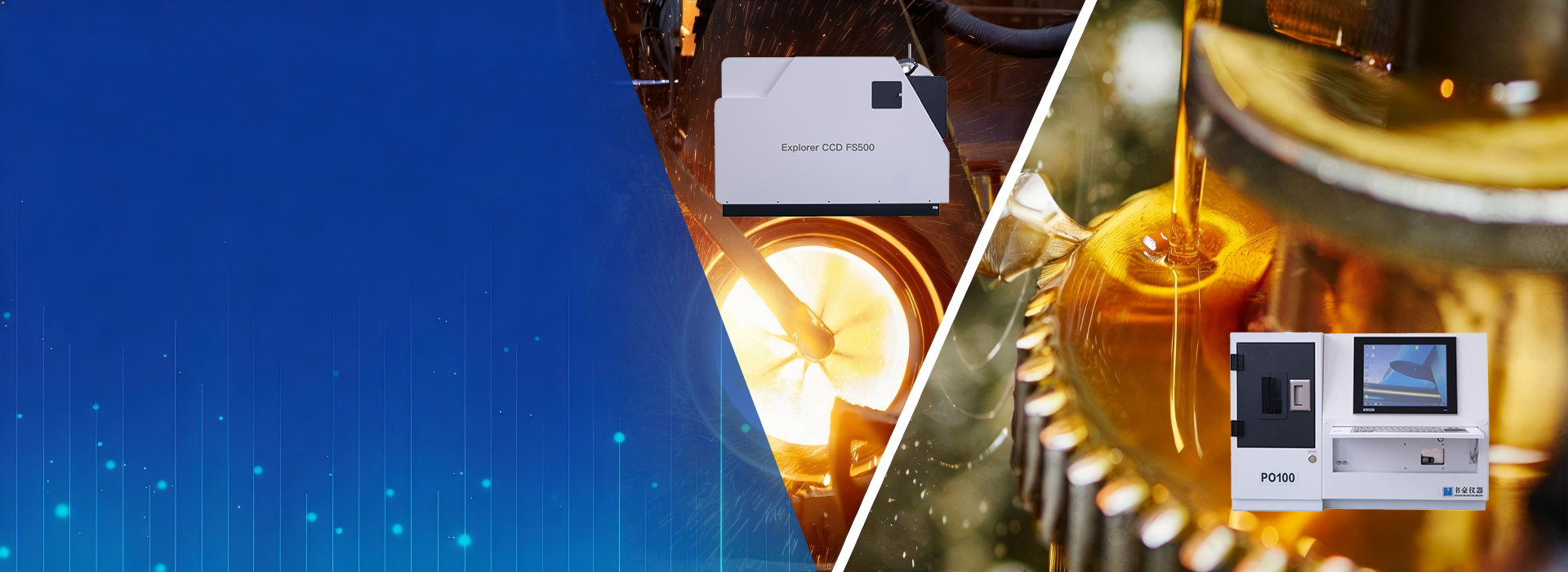
Your Leading CCD Spectrometer Manufacturer in China
The two most common solid-state detection technologies used in atomic emission spectrometers right now are CCD (Charge-Coupled Device) and CMOS (Complementary Metal-Oxide-Semiconductor).
Soohow Instrument is one of the few companies in China that has fully mastered the core technologies behind CCD spectrometers. They have independently developed and extensively optimized every part of the process, from designing the optical system and acquiring the CCD signal to creating the full-spectrum analysis algorithms. For steel companies, CCD spectrometers make it possible to do complete quality control on the whole process, from checking the raw materials to checking the finished products. For companies that make machines, these tools let them find out about unusual wear on their equipment early on by analyzing and monitoring fluids. Additionally, CCD spectrometers accurately measure the purity of gold in the precious metals industry, which helps with accurate value assessment.
Soohow CCD spectrometers are the best choice for elemental analysis in many different fields because they can acquire data across the entire spectrum and work consistently and reliably.
Offer a Variety of CCD Spectrometers for You
CCD spectrometers can get information on thousands of spectral lines at once, covering the whole spectrum from the ultraviolet to the near-infrared region. They are especially good for analyzing complex samples that need to have multiple elements measured at the same time.
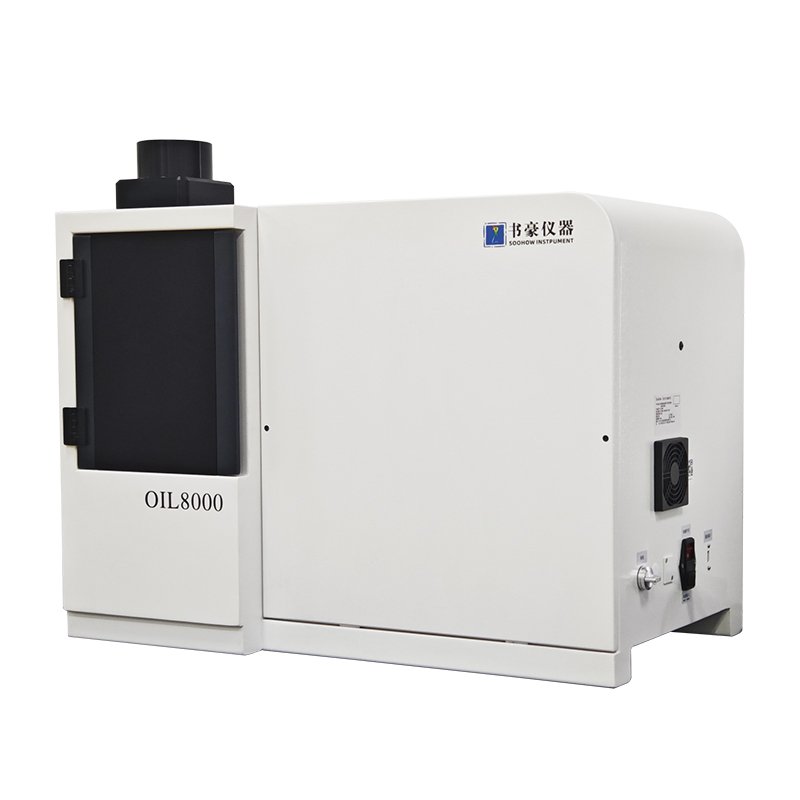 OIL8000 RDE-OES Elemental Analyzer
The OIL8000 uses rotating disc electrode technology, which lets you inject oil samples directly without any pretreatment. It can detect levels as low as 1 ppm.
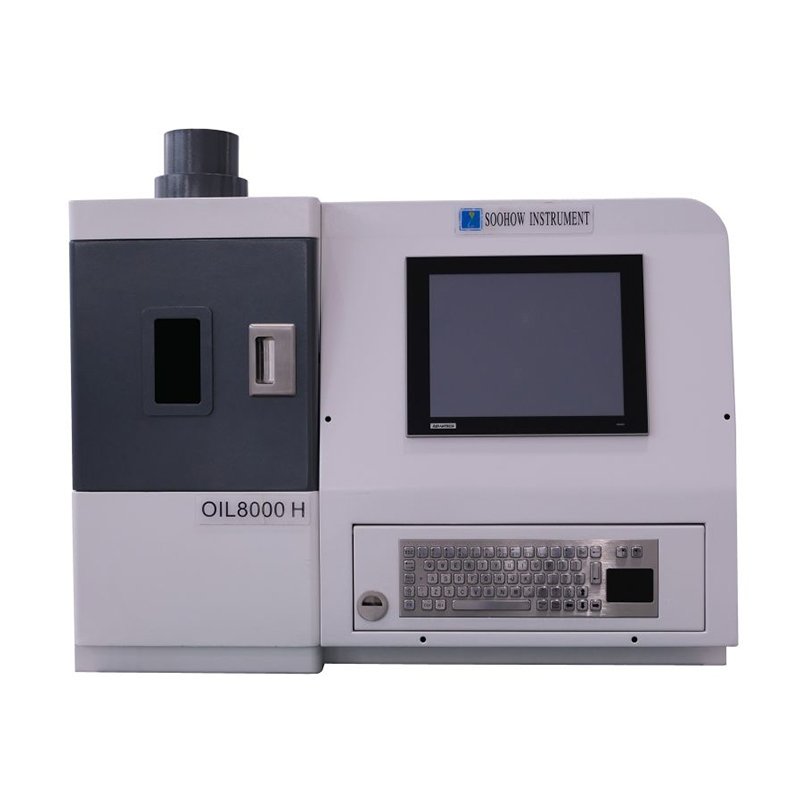 OIL8000H RDE-OES Elemental Analyzer
The OIL8000H builds on the OIL8000 by putting an industrial PC directly into the instrument. This means that you don’t need an external computer and the interface compatibility requirements are lower.
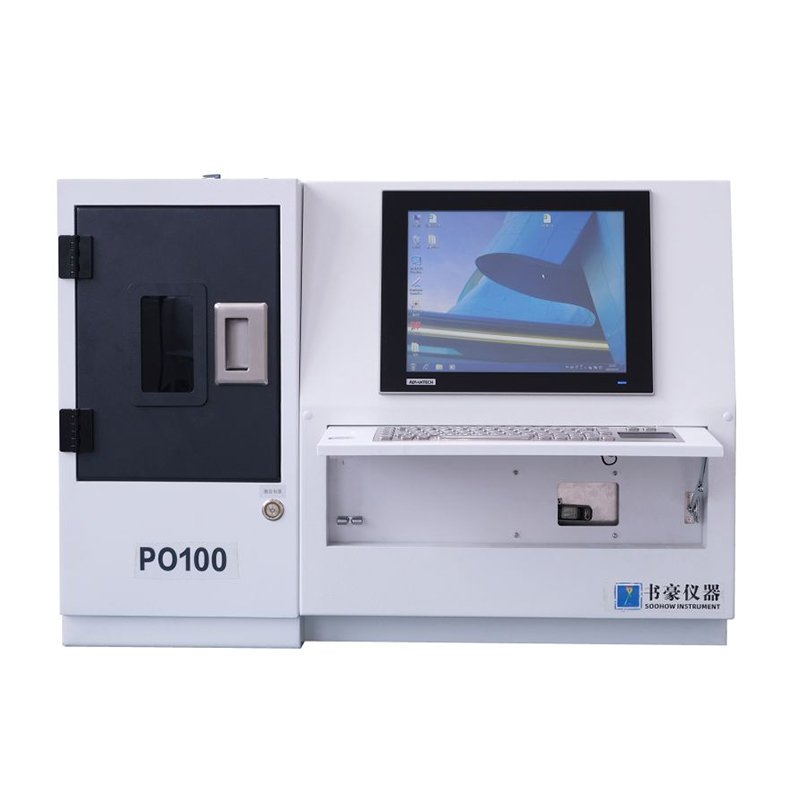 PO100 RDE-OES Elemental Analyzer
It has a built-in electrode grinder and an industrial PC, so it can do batch oil sample analysis and trend analysis in fixed labs.
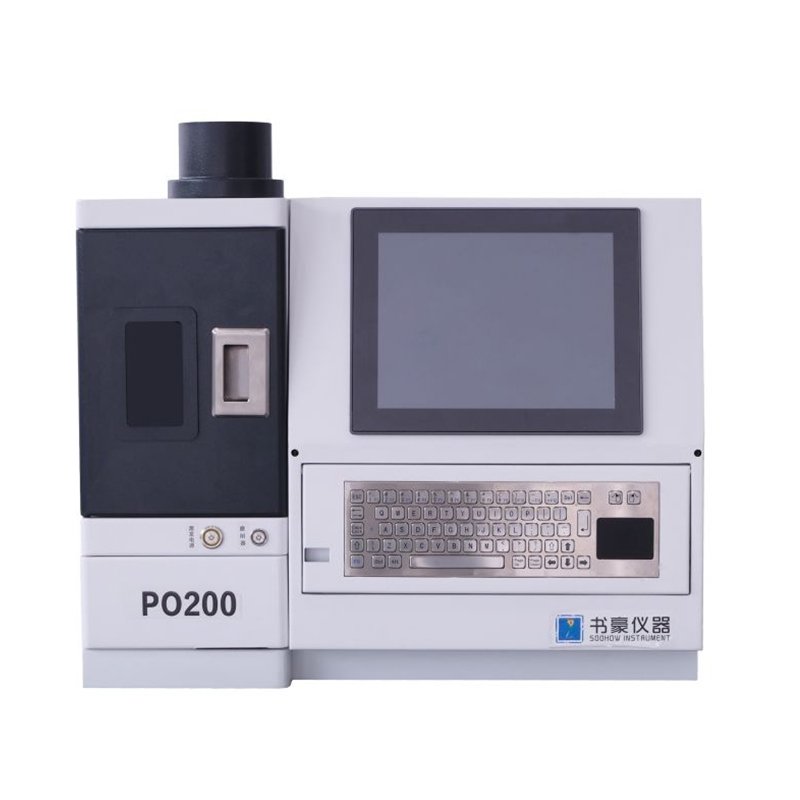 PO200 RDE-OES Elemental Analyzer
The PO200 uses structural optimization to cut its weight down to 42 kg while keeping its core functions. This makes it easier to carry while still being able to analyze data.
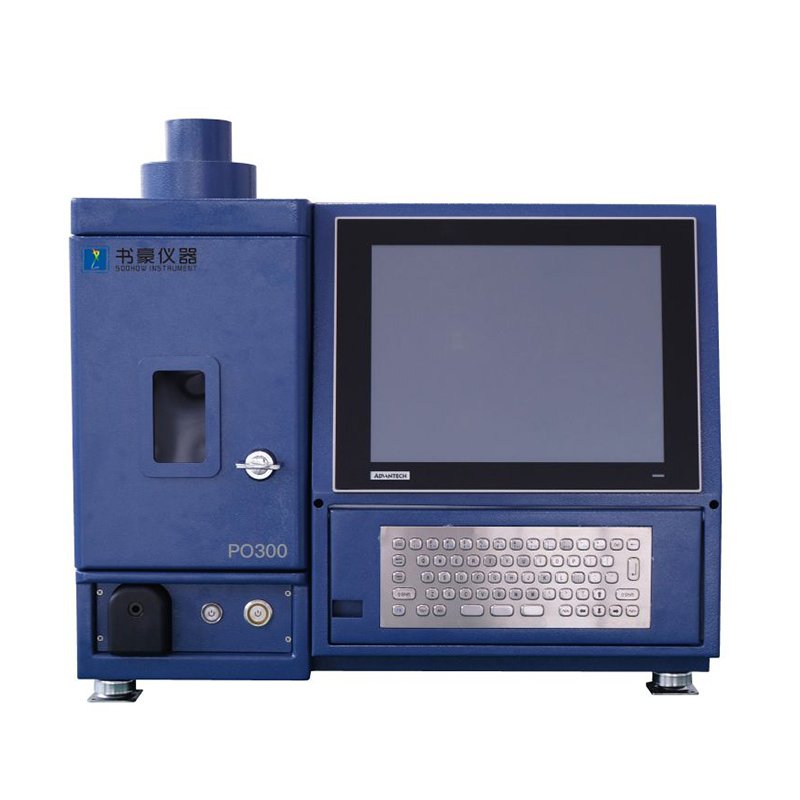 PO300 RDE-OES Elemental Analyzer
The PO300 is small and light, weighing only 35 kg. Its small size makes it easy to carry around, and it can be powered by a lithium battery.
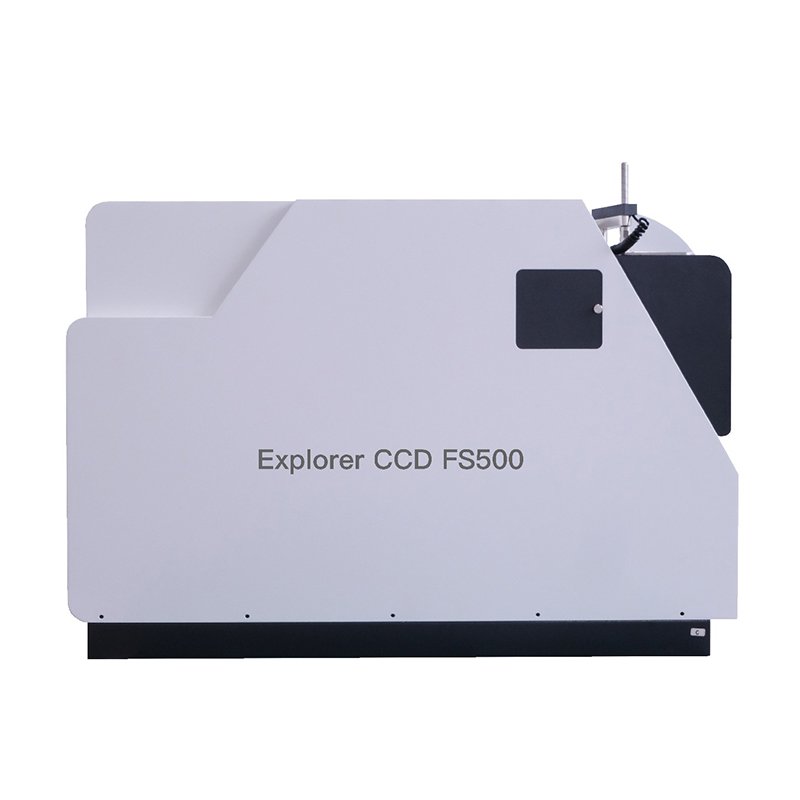 FS500 CCD-Based Spark OES
Includes a user-friendly interface and covers the basic elemental analysis needs for common metal matrices like steel, aluminum, and copper.
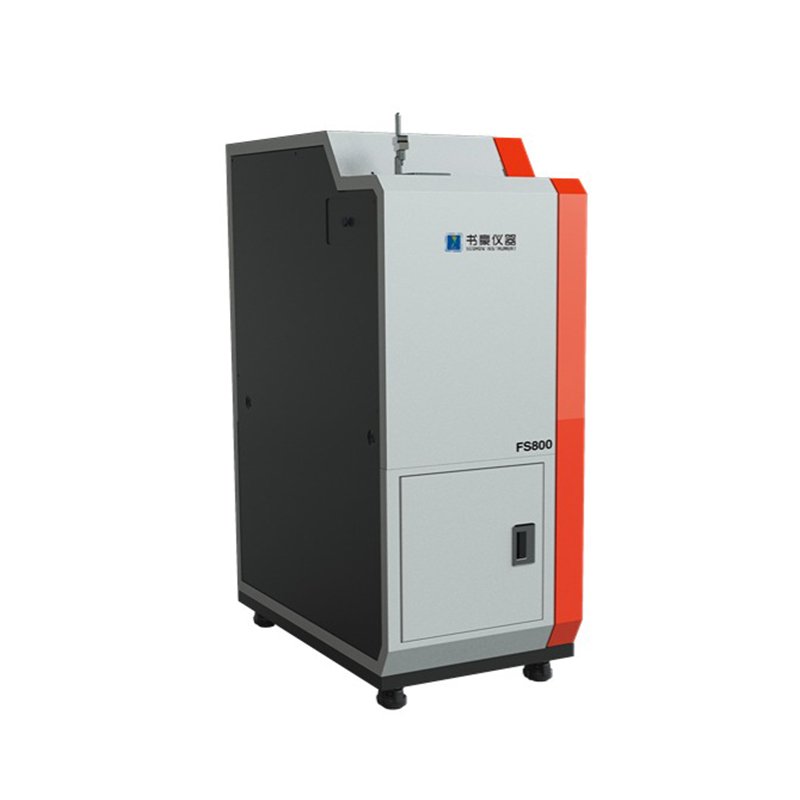 FS800 CCD Based Spark OES
The chassis has been redesigned with a vertical structure and fitted with drawers and casters, making it much easier to move than the FS500.
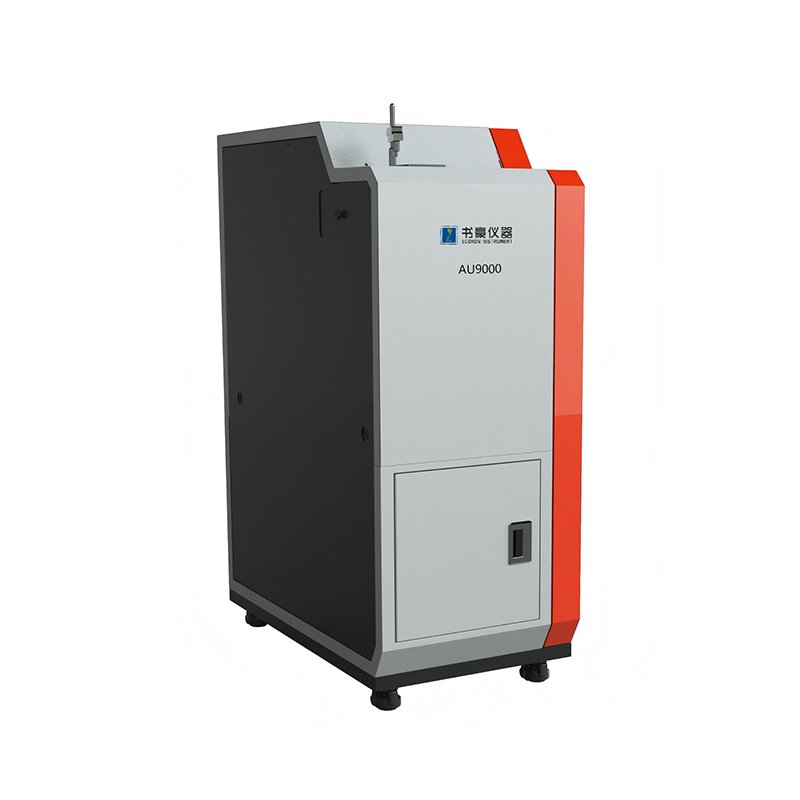 AU9000 CCD Based Spark OES
Using the FS800 as its hardware base, it has special curves just for analyzing gold.
Soohow Provides You with Installation and Training Services
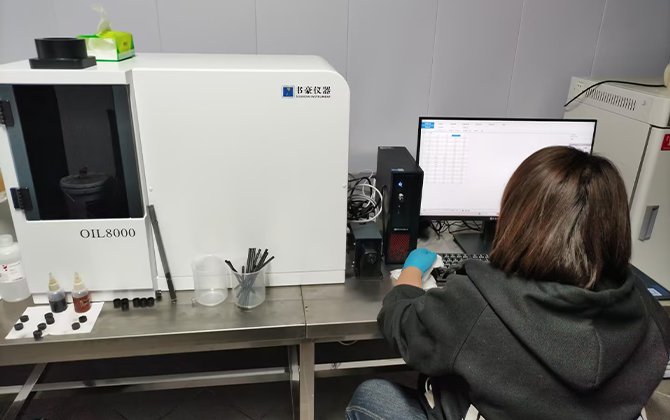
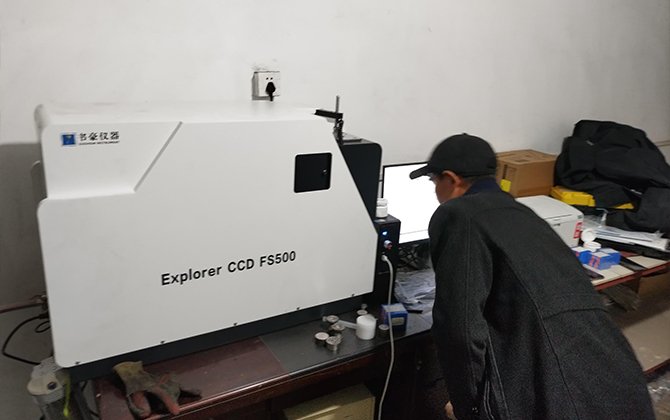
Engineer Soohow set up and installed the CCD spectrometer on site. This process had a number of steps, such as unpacking and inspecting the equipment, checking the environmental conditions, aligning the optical path, commissioning the vacuum system, and checking the standardization. All of these steps made sure that the instrument met its factory performance specifications.
After the installation was done, the engineer gave the user full training on how to use the system. The curriculum included how the instrument works, how to use it, how to keep it in good shape, how to standardize and calibrate it, and how to fix common problems. The training used a mix of theory and practice to make sure that the operators can do routine testing on their own.
After the installation, commissioning, and training were done, the engineer gave out a “Installation and Commissioning Report” and a “Acceptance Confirmation Certificate.” The instrument officially entered its full warranty period once the user signed and confirmed it. Soohow also gave out training certificates and set up a separate user profile that would be used for future technical support and service.
Both are solid-state detectors, but they have different features:
The CCD Spectrometer has big pixels, a high full-well capacity, good signal integration in low light, and low readout noise. It is great for finding trace elements and analyzing complicated matrices.
CMOS Spectrometer: It has fast readout speeds, low power use, and is very resistant to blooming (light streaking) when there is a lot of light. It is perfect for quick, high-frequency analysis and for use in portable field devices.
If getting the best signal-to-noise ratio and the best trace detection abilities is your top priority, go with a CCD Spectrometer. If you need fast response times and high-throughput analysis, go with a CMOS Spectrometer.
Excitation Method: Oil CCD spectrometers use rotating-disc electrode technology to excite the oil sample with an electric arc. Metal CCD spectrometers use spark excitation, which means that the sample has to be turned into a solid block.
Sample Preparation: You don’t need to do anything to liquid oil samples before testing them; you do need to grind metal samples to make a flat, smooth surface for excitation.
Analytical Focus: Oil analysis looks at wear metals and additive elements, while metal analysis looks at the composition of the material and any impurities.
A CCD detector is a solid-state semiconductor device with no moving parts, so it should last for more than 10 years. The Soohow spectrometer has a built-in automatic dark current correction function that effectively compensates for this change. The aging process mostly shows up as a slow rise in dark current. As a result, users don’t have to change the CCD every so often while the instrument is in use. Instead, they just need to check the instrument’s performance with standard reference materials—preferably every six months—to make sure the calibration curve hasn’t changed. The CCD detector is a core, fixed part of the instrument, unlike consumables like electrodes or oil cups that need to be replaced from time to time.
A CCD spectrometer uses two things to stop this kind of interference: a high-resolution optical system and smart software. The hardware includes a high-density grating with 2700 lines/mm and a long focal length design that completely separates spectral lines. The software includes a built-in spectral line database and interference correction functions that automatically find and remove interference from nearby lines. If the lines are very close together, you can manually set the interference coefficients to make corrections.
The CCD spectrometer’s spectral range and the types of elements it can analyze depend on how many CCD detectors it has. Each CCD only works for a certain range of wavelengths. So, the more detectors you set up, the wider the spectral coverage. Users can choose a configuration for the Soohow FS series based on their specific analytical needs. The series can be set up with up to 16 CCD. Eight detectors are enough for regular analysis of iron and steel. However, if you need to analyze different matrices, like aluminum alloys, copper alloys, and others, we recommend getting the full 16-detector configuration so that you can easily add more detectors in the future.